When you compare a quote for an implant, the price difference often comes down to one thing few patients think to ask about: which brand will be used. Understanding the main dental implant brands helps you see what you are paying for and make informed choices, rather than relying on the final number alone. In this guide we compare premium brands like Straumann and Nobel Biocare with value brands like MIS and Megagen, explain how the brand affects price, and which documents to insist on before you start.
A dental implant is a small titanium screw placed into the jawbone that should last for decades. The brand matters because it determines the quality of the titanium, the thread geometry, the surface treatment that helps it integrate with the bone, and above all the availability of compatible components in the years to come.
That last point is often underestimated. If you ever need to replace a crown or a component, a dentist in your own country will need to know exactly which system was placed in order to order the right parts. Documented international brands are recognised by professionals across Europe, while a generic, untraceable implant can cause problems. This is why reputable clinics work only with CE-certified brands from international manufacturers.
Straumann (Switzerland) and Nobel Biocare (Sweden) are considered the reference brands in the field. They are among the most studied systems in the world, backed by decades of clinical data and research. Their latest-generation surfaces are designed to encourage rapid integration with the bone, which can be an advantage in more complex cases, where bone quality is reduced, or when the aim is more predictable healing times.
The trade-off is cost: premium components carry a higher price, which is reflected in the final quote. It is worth remembering that a premium brand does not automatically guarantee a better outcome: the most decisive factor is always the surgeon's experience and the planning of the case. For many patients, however, the reassurance of a system with such a long clinical track record has genuine value.
MIS (Israel) and Megagen (South Korea) belong to the value category, but that is a term that should be understood correctly: it does not mean lower quality, rather an excellent balance between clinical performance and price. Both are international manufacturers with CE certification, widely used across Europe and supported by solid clinical documentation. Megagen in particular is valued for its modern surfaces and, depending on the system, can offer an extended manufacturer warranty.
For most standard cases, an implant from a good value brand delivers excellent clinical results at a lower cost. The choice between premium and value is therefore not between good and bad, but between two valid options that suit different needs, budgets and clinical situations. An honest dentist will explain which category makes most sense in your specific case, without automatically steering you towards the most expensive option.
Regardless of the clinic or the country, there are three questions you should always ask before agreeing to implant treatment. First: which brand and model of implant will be used? Second: can I receive the certificate confirming it is a genuine, CE-certified product? Third: will I be given an implant passport?
The implant passport is a document that records the serial number, the manufacturer and the warranty details. It is your reference point for any future check-up or procedure and it proves that what was placed matches what you paid for. The most reliable clinics across Europe use the same international brands and always provide this documentation: if a clinic hesitates to tell you the brand or to issue the passport, treat it as a signal worth paying attention to.
The brand is one of the main components of the cost of an implant. As a rough guide, a single implant can range from around 450 to 800 euros, while an implant together with a crown usually sits between 800 and 1,200 euros. Within these ranges, premium systems tend towards the higher end and value systems towards the more affordable side. The rest of the price depends on the surgeon's work, the planning technology and the type of crown.
An important part of the price gap between countries has nothing to do with the implant brand, but with the economic context. In Albania, for instance, no VAT is applied to medical procedures, and the cost of living, rents and salaries is lower: this explains why the same implant, of the same CE-certified brand, can cost less than in Italy or the UK, with no difference in materials. This is how savings of up to 70 percent become possible while keeping the same standards and the same brands.
At Navident we work exclusively with CE-certified implants from international brands, including Straumann, Nobel Biocare, MIS and Megagen, supplied with an implant passport. The choice of the most suitable system is made case by case, assessing bone quality, the position of the tooth, your aesthetic needs and your budget. We always explain which brand we propose and why, so the decision remains yours and fully informed.
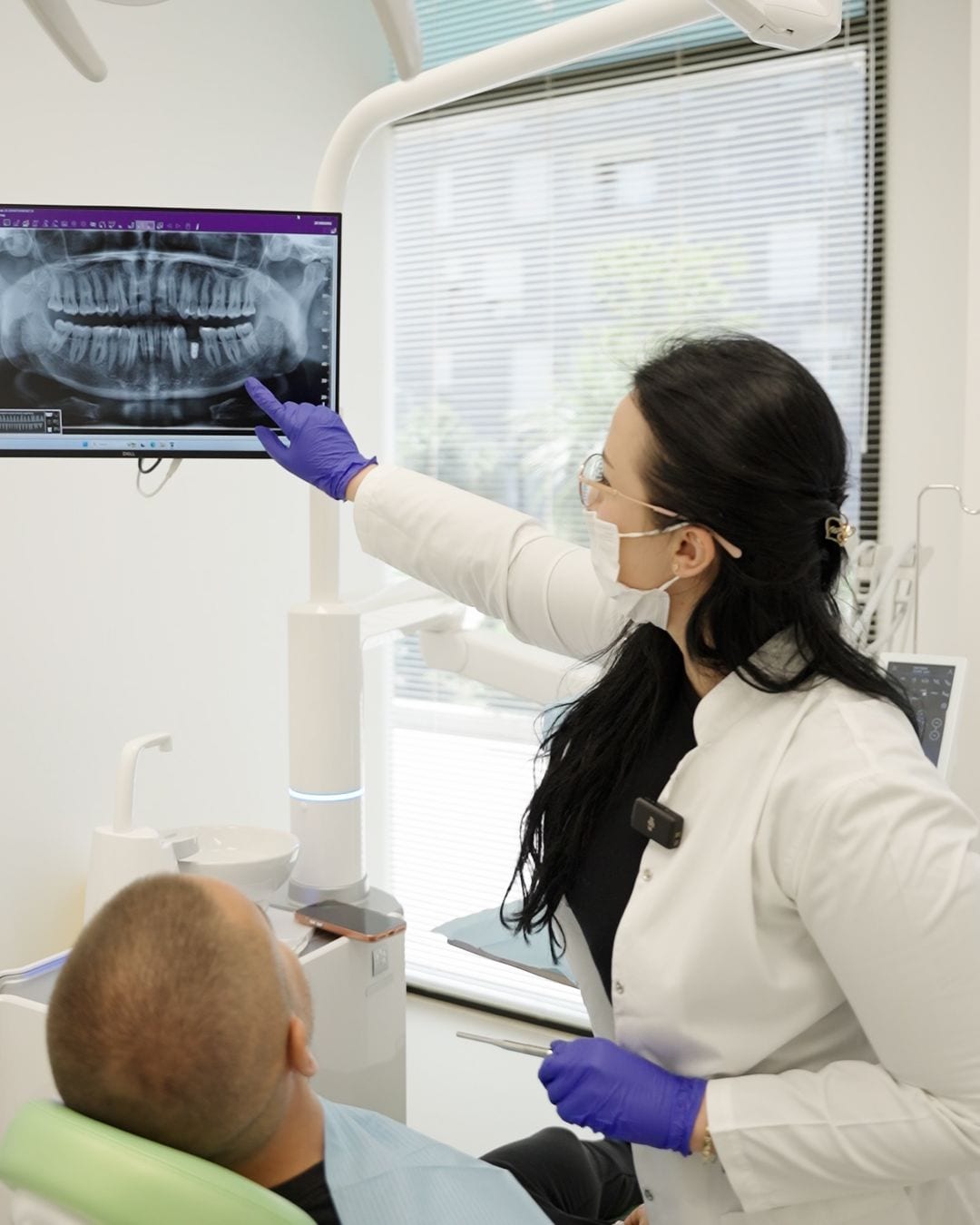
For every implant we issue the passport with serial number and manufacturer, alongside our written guarantee on treatments. Before you travel you receive a fixed, written quote, and you can send us your panoramic X-ray for a free online consultation, in which we assess the case and outline the brand options before you even book the flight. Our staff speaks Italian and English and many of our dentists trained in Italy, Germany or other EU countries.
There is no single best brand overall. Straumann and Nobel Biocare are the premium references with the longest clinical track record, while MIS and Megagen offer excellent performance at a lower cost. The best system is the one most suited to your specific case: bone quality, tooth position and budget matter more than the brand name alone. An experienced dentist will explain which makes most sense for you.
No. MIS and Megagen are international manufacturers with CE certification, widely used across Europe and backed by solid clinical documentation. The word value indicates a good performance-to-price ratio, not lower quality. For most standard cases they deliver excellent results, and the most decisive factor for success remains the surgeon's experience and proper planning of the case.
By asking for the implant passport. It is a document that records the brand, model, serial number, manufacturer and warranty details. Reputable clinics always issue it. It is essential because any dentist in your own country can then order the correct components for future check-ups or replacements. If a clinic will not tell you the brand or issue the passport, that is a signal worth paying attention to.