Zirconia and E-max are the two most-used ceramic materials for crowns and veneers. Both are metal-free and natural-looking, but they have different properties: understanding the difference helps you choose the right solution for each tooth.
Zirconia (zirconium oxide) has a flexural strength of about 1000 MPa, versus around 500 MPa for E-max (lithium disilicate). It's therefore better suited to high-load areas like molars, to full-arch restorations, and to patients who grind their teeth.
E-max is more translucent and mimics natural enamel better than traditional zirconia, making it ideal for front teeth and veneers in the "smile zone". Modern zirconia, however, has partly closed this gap with more translucent variants.
For front veneers and crowns, where aesthetics come first, E-max is often the better choice thanks to its natural translucency.
For molars, long bridges, and implant prostheses, where strength matters, zirconia is the safer choice for long-term durability.
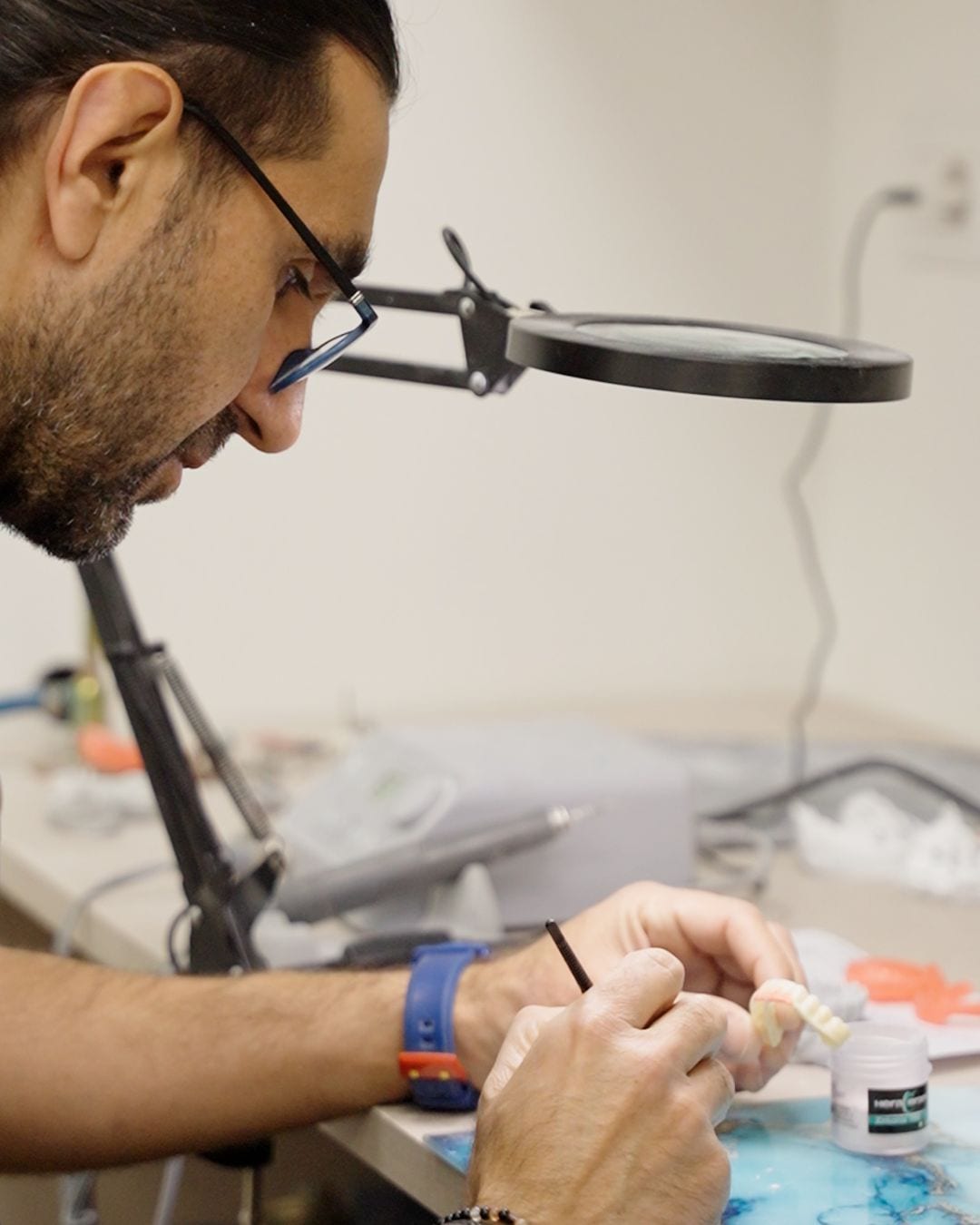
We select the material based on the tooth's position and your needs, often combining E-max in the aesthetic zone and zirconia in load-bearing areas. Both materials are certified and crafted with CAD/CAM technology, and every restoration is covered by a written guarantee.
Zirconia, at about 1000 MPa versus E-max's 500 MPa. That's why it's preferred for molars, bridges and implant restorations, while E-max excels at front-tooth aesthetics.
Yes, and it's common practice: E-max on front teeth for maximum aesthetics and zirconia on back teeth for maximum strength, with a uniform, natural final result.